Lumens to Watts: The Pro's Guide to Real Brightness
Lumens to Watts: The Pro's Guide to Real Brightness
You bought a 1600‑lumen LED bulb, confident it would brighten your living room. But the light feels harsh and flat — or still too dim. What went wrong? A simple lumens to watts conversion isn't enough. Brightness isn't just about lumens. This guide reveals the three missing factors most buyers overlook, and gives you a room‑by‑room blueprint for real, comfortable brightness every time.
Watts vs. Lumens: The Old Rule That Deceives You
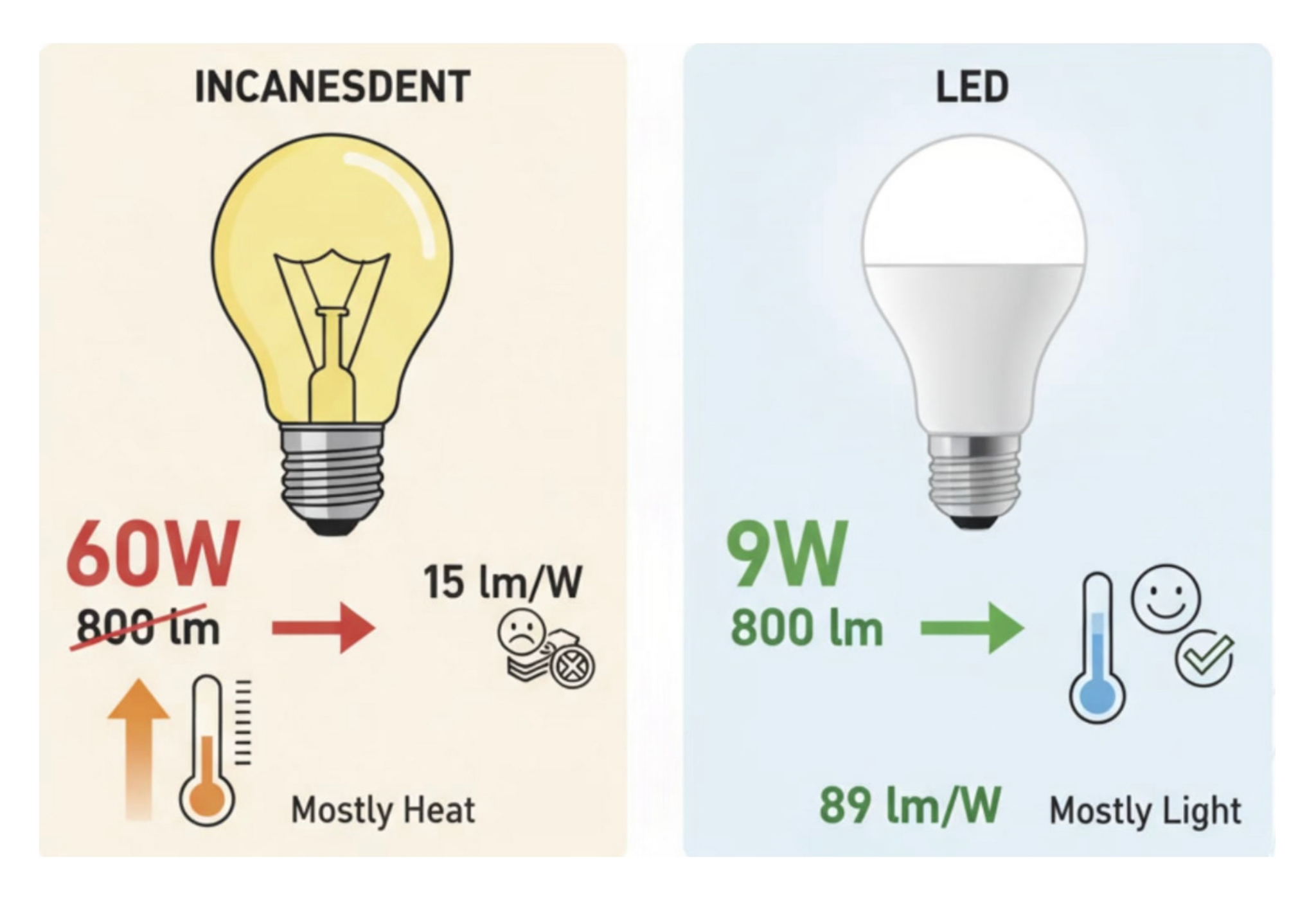
For decades we bought light bulbs by the watt. A 60‑watt bulb meant a familiar, cozy brightness. That rule worked — until LED technology broke it. Today, a 9‑watt LED can match that same 60‑watt incandescent. Using watts to judge brightness now only tells you how much electricity you're paying for, not how much light you're getting.
What is a Watt, Really?
A watt is a unit of power — it measures energy consumption per second. In the old incandescent days, higher wattage almost always meant more light, because the filament glowed hotter. That's why we linked watts to brightness in our minds. But an LED produces light through an entirely different process, delivering far more lumens per watt. Continuing to shop by watts is like judging a car's speed by its fuel consumption. It's the wrong metric.
Lumens: The True Measure of Light Output
Lumens measure the total amount of visible light a source emits. The higher the lumens, the greater the light output. So far, so good. But here's the twist that changes everything: lumens alone don't determine how bright a space feels. Two bulbs with identical lumen ratings can feel dramatically different — one might seem harsh and blinding, the other weak and shadowy. The reason lies in three factors most guides completely ignore. That's exactly what we'll unpack in the next section.
Lumens to Watts Conversion: The Quick‑Reference Charts (and Formula)
Before we dive into those hidden factors, let's answer the most immediate question: "I'm replacing my old 60‑watt bulb — what LED wattage do I need?" Here's your toolkit. Keep this lumens to watts conversion chart nearby whenever you're sourcing replacements — it maps every common incandescent and halogen spec to a modern LED equivalent.
The Simple Lumen‑to‑Watt Formula
If you ever need to convert lumens to watts yourself, the formula is straightforward:
Watts = Lumens ÷ Luminous Efficacy (lm/W)
For example, a 900‑lumen LED with an efficacy of 90 lm/W uses just 10 watts. Conversely, to replace a 60‑watt incandescent (roughly 15 lm/W) you'd look for an LED delivering around 900 lumens.
Master Lumens to Watts Conversion Chart
No need to do the math — this table covers the most common replacements, from 1000 lumens to watts and beyond. You'll also find data for specific values like 450 lumens to watts, 800 lumens to watts, and 1200 lumens to watts.
| Lumens | Incandescent Watts | Halogen Watts | LED Watts (approx.) |
|---|---|---|---|
| 200 – 300 | 25 – 30 W | 18 – 25 W | 2 – 4 W |
| 400 – 500 | 40 W | 35 W | 3 – 5 W |
| 600 – 800 | 60 W | 45 – 50 W | 6 – 9 W |
| 900 – 1100 | 75 W | 60 – 65 W | 9 – 12 W |
| 1300 – 1600 | 100 W | 90 – 100 W | 12 – 17 W |
| 2000 – 2600 | 150 W | 125 – 145 W | 17 – 27 W |
| 2800 – 3200 | 200 W | 175 W | 25 – 32 W |
Understanding Luminous Efficacy (lm/W): The Real Energy‑Saving Hero
Luminous efficacy is simply lumens divided by watts — a measure of how efficiently a bulb turns electricity into light. Think of it like miles per gallon for your car. An old incandescent might only manage 12‑18 lm/W, while a modern LED easily achieves 90‑110 lm/W. That's why an LED can slash your lighting energy bill by over 80%. When you see a bulb labeled 100 lm/W, you know it's a high‑efficiency performer.
Why “More Lumens” Doesn't Always Mean “Brighter”: The 3 Missing Factors
Knowing the lumen count is half the answer. The other half — the half that actually shapes how a room feels — is what comes next. Even with the perfect lumen count, your room can still feel dark, glaring, or washed out. The missing pieces are beam angle, color temperature, and color rendering.
Factor #1: Beam Angle and “Useful Lumens”
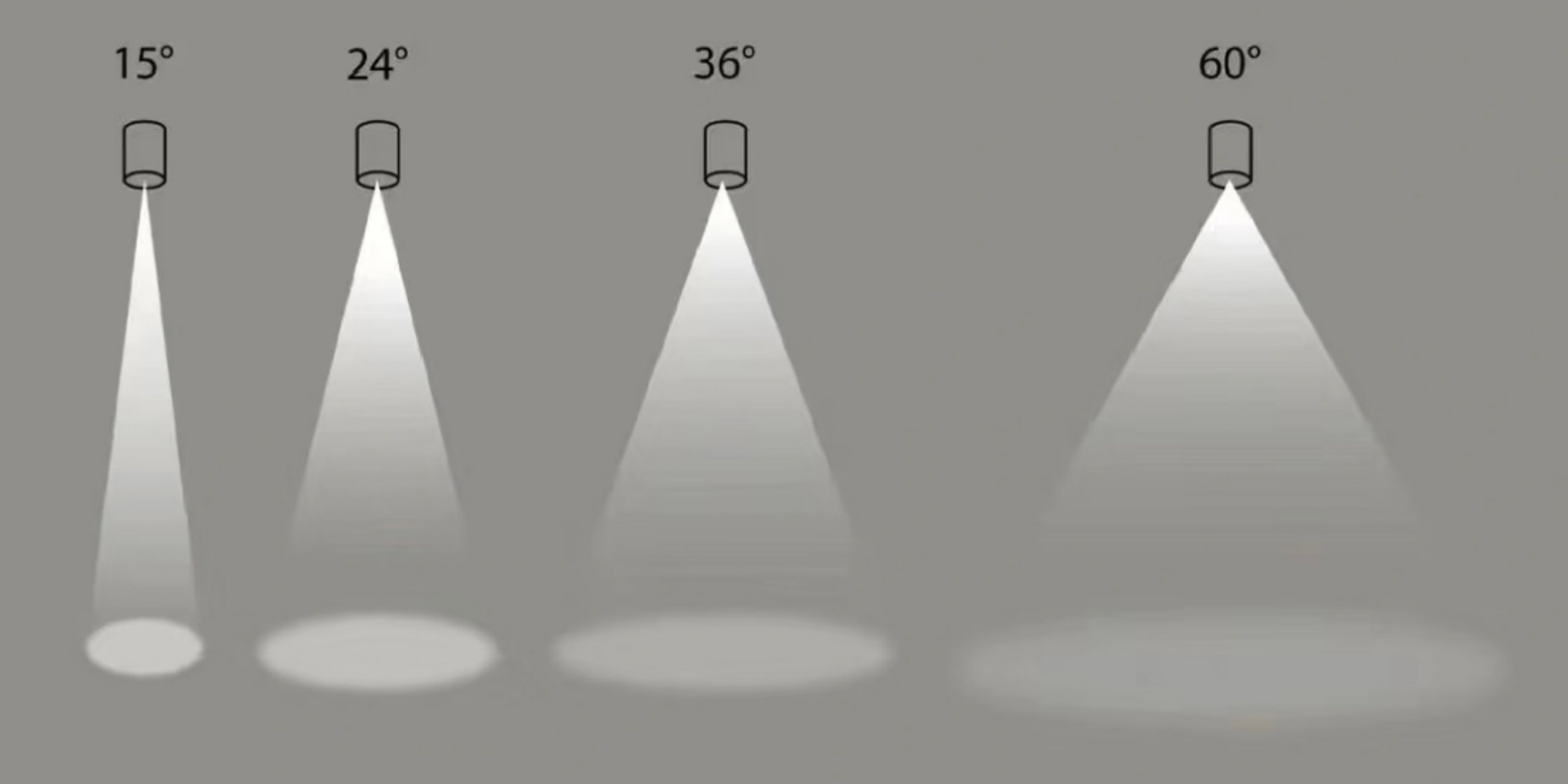
A bulb might emit 1000 lumens in all directions, but your fixture's reflector or lens concentrates those lumens into a specific beam angle. A narrow 25° spotlight throws all its light onto a small area — feeling incredibly bright there. A wide 120° flood spreads the same light across an entire room — feeling much dimmer at any single point.
This leads to the concept of "Useful Lumens" — the amount of light actually landing where you need it. When buying, don't just ask "how many lumens?" Ask "what beam angle do I need for this task?" For reading or highlighting artwork, a narrow beam delivers more useful lumens. For general room lighting, you'll need a wider beam (and possibly more total lumens) to avoid dark corners.
Factor #2: Color Temperature (Kelvin) Tricks Your Eyes
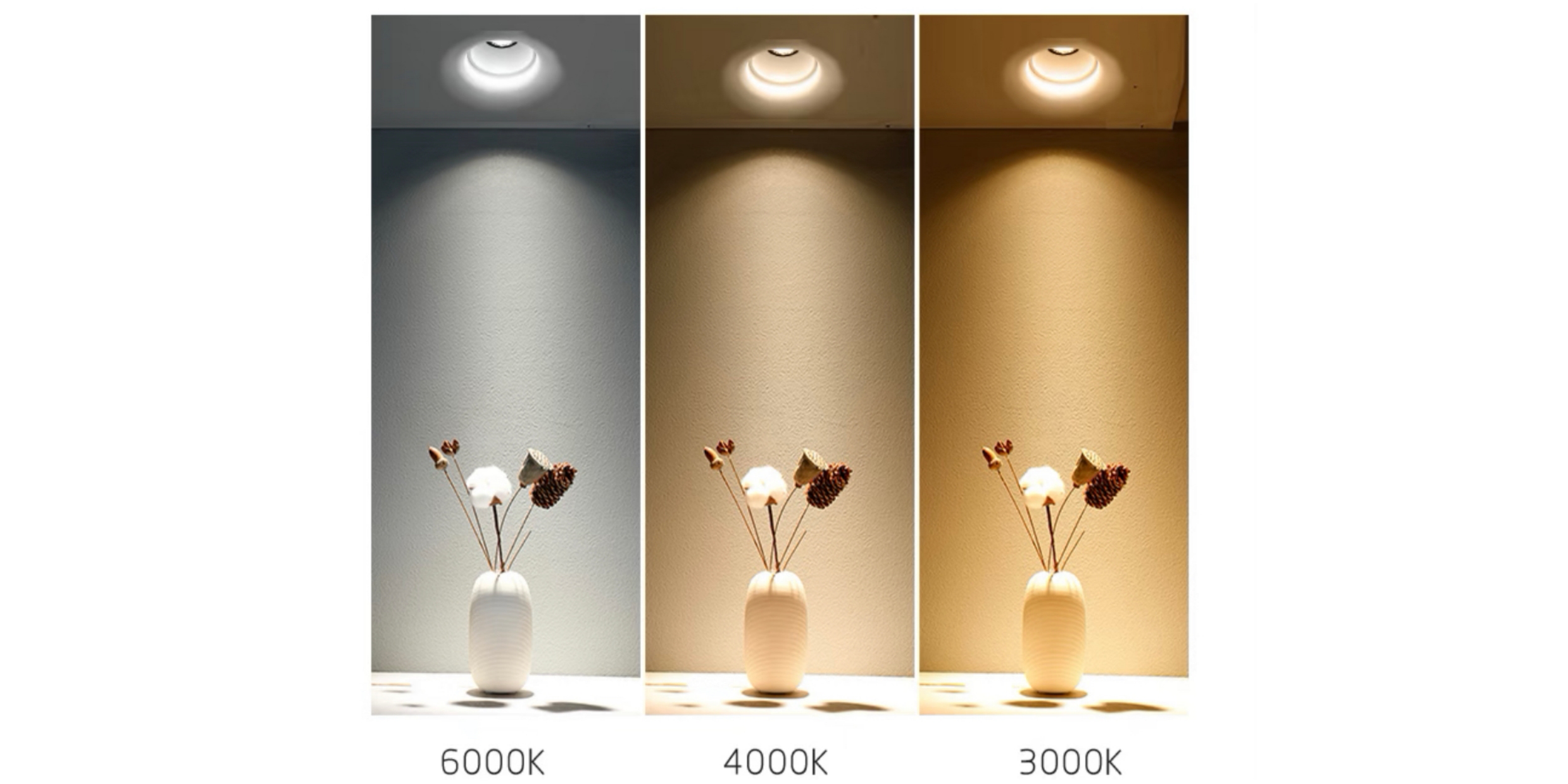
Color temperature, measured in Kelvins (K), describes whether light appears warm (yellowish) or cool (bluish). Here's the psychological trick: at identical lumen levels, cooler light (4000K–6500K) feels substantially brighter and more "alert" than warm light (2700K–3000K). Human eyes are simply more sensitive to blue‑rich light.
That doesn't mean cool light is always better. A 3000K warm glow creates a relaxing, intimate atmosphere for a bedroom or dining room. A 5000K daylight tone enhances focus and detail perception — ideal for a home office or workshop. Chasing perceived brightness by picking the highest Kelvin number is a common mistake; it often leads to a space that feels clinical and harsh rather than genuinely bright.
Factor #3: Color Rendering Index (CRI) and Visual Clarity
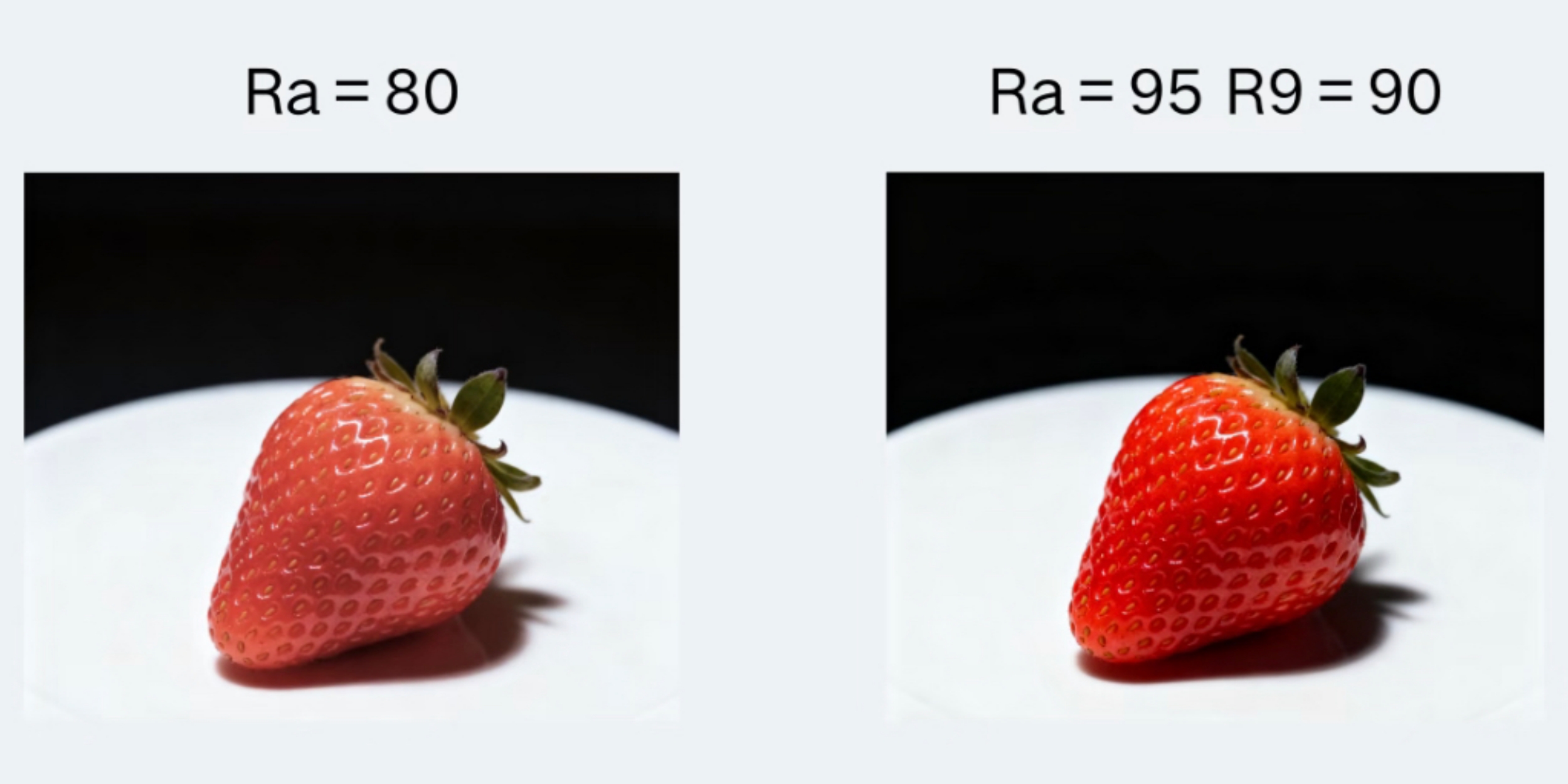
CRI (Color Rendering Index) rates how accurately a light source reveals colors compared to natural daylight, on a scale of 0 to 100. A bulb with CRI 95 makes reds pop, skin tones look healthy, and text appear crisp. At CRI 70, everything looks slightly muddy and flat — and your brain has to work harder to process what you're seeing.
High CRI doesn't increase lumens, but it dramatically improves visual clarity. In a kitchen, a 90+ CRI light helps you spot the difference between fresh herbs and wilted ones. In a closet, it lets you distinguish navy from black. For any space where color matters, aim for CRI 90 or above. Many standard LEDs only offer 80 CRI; the upgrade is noticeable and worth the small premium.
A Room‑by‑Room Guide: How Many Lumens Do You Actually Need?
Now we put it all together. Each room has a different mission, and that mission defines the "brightness recipe" — a mix of lumens, beam spread, color temperature, and CRI.
Redefining “Brightness” for Each Room
Forget the outdated "watts per square foot" rule. A living room demands soft, layered warmth; a kitchen needs shadow‑free task lighting; a home office requires focused, alertness‑boosting illumination. The table below gives you a starting point, but always consider the activities that actually happen in your space.
Room‑by‑Room Lumens & Foot‑candle Recommendation Table
| Room | Primary Function | Recommended Foot‑candles (Lux) | Suggested Lumens (for 150 sq ft) | Ideal CCT | Min. CRI |
|---|---|---|---|---|---|
| Living Room | Relaxation, entertaining | 10–20 fc (100–200 lux) | 1,500–3,000 lm | 2700K–3000K | 80+ |
| Kitchen | Food prep, cooking | 30–50 fc (300–500 lux) | 4,000–7,000 lm | 3000K–4000K | 90+ |
| Dining Room | Meals, gatherings | 15–25 fc (150–250 lux) | 2,000–3,500 lm | 2700K–3000K | 90+ |
| Bedroom | Sleep, reading | 10–20 fc (100–200 lux) | 1,500–3,000 lm | 2700K–3000K | 80+ |
| Home Office | Focus, computer work | 30–50 fc (300–500 lux) | 4,000–7,000 lm | 3500K–5000K | 90+ |
| Bathroom | Grooming, makeup | 40–60 fc (400–600 lux) | 5,500–9,000 lm | 3000K–4000K | 90+ |
fc/lux ranges align with IES-recommended practice for residential applications. Assumes standard 8-9 ft ceiling height. For darker wall colors, increase lumens by 15-20%.
Special Case: Task Lighting vs. Ambient Lighting
Example: Kitchen
Your ceiling fixture provides ambient light, but when you stand at the counter you cast a shadow right where you're chopping. The fix? Under‑cabinet LED strips add task lighting exactly where you need it. This combination lets you keep the overall room softer while still having brilliant, safe work zones.
Example: Home Office
An overhead light alone often creates glare on your screen. A better recipe: moderate ambient light (around 2000 lumens, 3500K) plus an adjustable desk lamp with a focused beam. The task light boosts contrast on your documents without washing out the room. Your eyes will thank you.
How to Read a Modern Bulb Label Like a Pro
You're standing in the aisle. You know the theory. Now, let's decode what's actually printed on the box.
Decoding the “Lighting Facts” Panel
Focus on these four items, in this order:
- Brightness (Lumens) — This is your new north star. Ignore the "watt equivalent" for now.
- Light Appearance (Kelvin) — Confirms whether you're getting warm, neutral, or cool light. Remember how color temperature tricks your perception.
- Estimated Yearly Energy Cost — A direct reflection of efficacy. A lower number here means a more efficient bulb.
- CRI — If it's listed, check it. If it's not, assume it's 80 or lower — fine for a closet, but not for a kitchen or bathroom.
The “Equivalent Wattage” Trap
Many LED boxes shout "60‑Watt Equivalent" in giant letters. This is a marketing crutch designed to help people still clinging to the old system. But equivalencies are inconsistent across brands. A better habit: decide how many lumens you need, then verify the bulb's actual wattage and efficacy. That way you control both brightness and running cost, without relying on a vague comparison to a technology you're leaving behind.
Frequently Asked Questions
Is 800 lumens bright enough for a bedroom?
For a typical 150 sq ft bedroom used mainly for sleeping, 800 lumens can be sufficient if you also have bedside task lamps. However, a single 800‑lumen ceiling fixture will feel dim for tasks like reading or dressing. We recommend a layered approach: 1,500–2,000 lumens of ambient light, supplemented by focused task lighting.
How do I convert watts to lumens for my old incandescent bulbs?
As a rule of thumb, multiply the incandescent wattage by 15. A 60W incandescent ≈ 900 lumens. Then use our lumens to watts conversion chart above to find the modern LED wattage that delivers those lumens.
Does color temperature affect lumens?
No, color temperature does not change the physical lumen output. But it strongly influences perceived brightness. Cool white light (5000K+) feels brighter to the human eye than warm light (2700K) of the exact same lumen rating.
Why does my 1000‑lumen LED spotlight look dimmer than my 800‑lumen bulb?
This is almost certainly due to beam angle. A spotlight concentrates its lumens into a very narrow cone — if you step outside that cone, the light falls off dramatically. An 800‑lumen bulb with a wide 240° spread may illuminate the whole room more evenly. It's the classic "useful lumens" scenario we explained earlier.
How many lumens per square foot do I need in a kitchen?
Aim for 30–50 lumens per square foot of ambient light. In a 150 sq ft kitchen, that's 4,500–7,500 lumens. Add under‑cabinet task lighting for countertops to reach 50–75 lumens per square foot in work zones.
What is the difference between lumens and lux?
Lumens measure the total light emitted by a source. Lux measures how much of that light actually falls on a surface (lumens per square meter). A 1000‑lumen bulb placed high up might deliver only 100 lux to your desk, while the same bulb in a focused fixture could deliver 500 lux. Both numbers matter, but lux is what your eyes ultimately experience.
What CRI should I look for when buying LED bulbs?
For general living spaces, choose CRI 80 or above. For kitchens, bathrooms, and workspaces where color accuracy is important, select CRI 90+. High CRI (95+) is ideal for art studios, retail displays, and makeup areas.
Do LED bulbs lose lumens over time? (Lumen Depreciation)
Yes, all LEDs gradually dim over their lifespan. Quality LEDs are typically rated to maintain at least 70% of their initial lumens after 50,000 hours (L70). Cheaper bulbs may fade faster. This is another reason to buy from reputable manufacturers who publish their lumen maintenance data.
Putting It All Together: Your Brightness Blueprint
You've moved beyond the single‑number mindset. Choosing the right light isn't about finding the highest lumen count or matching an old wattage. It's about orchestrating a brightness recipe — lumens, beam angle, color temperature, and CRI — tailored to each room's purpose. Since 2010, Moluce has engineered LED luminaires where these principles are not afterthoughts — they're on every spec sheet. With these tools, you can transform any space from merely illuminated to genuinely inviting and functional.
Ready to put real brightness into practice?
Explore our LED lighting collections designed with the beam control, high CRI, and flexible color temperatures that turn these principles into reality. For commercial projects, we offer custom specifications and volume pricing.
2026 Top Designer Lighting Brands Guide
4000K vs 6500K: A Complete Guide to LED Color Temperature
Related Article